The CMS that adapts to
your frontend
Nexus discovers pages, sections and content types from your existing Next.js app — then turns them into an in-context visual editor. Build first. Manage content instantly. No manual schema creation required.
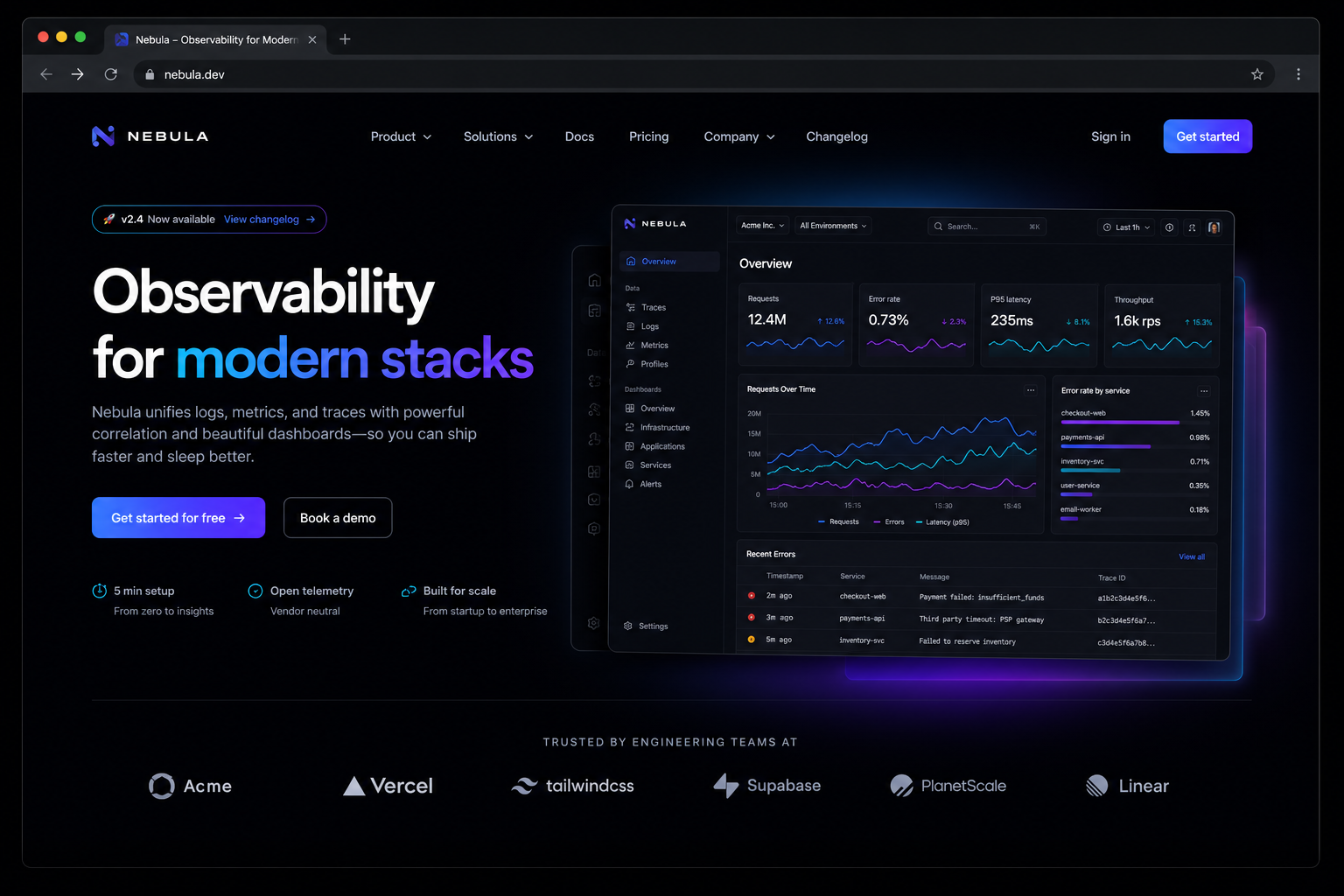
Stop rebuilding your frontend inside a CMS.
The traditional headless workflow is backwards: you design a brilliant frontend, then spend weeks translating it into a rigid, disconnected schema. Nexus inverts it — your components flow through a discovery engine into any content store.
Your frontend is the source of truth.
Instead of pushing structured data down into your code, Nexus reads your runtime DOM and component props to infer structure automatically — then stores only the overrides on top.
Build normally.
Write your React / Next.js components exactly as you usually would. No wrappers, no provider soup, no schema files.
Run discovery.
`nexus generate` crawls your component tree, derives stable ids and emits a versioned blueprint of every editable region.
Manage visually.
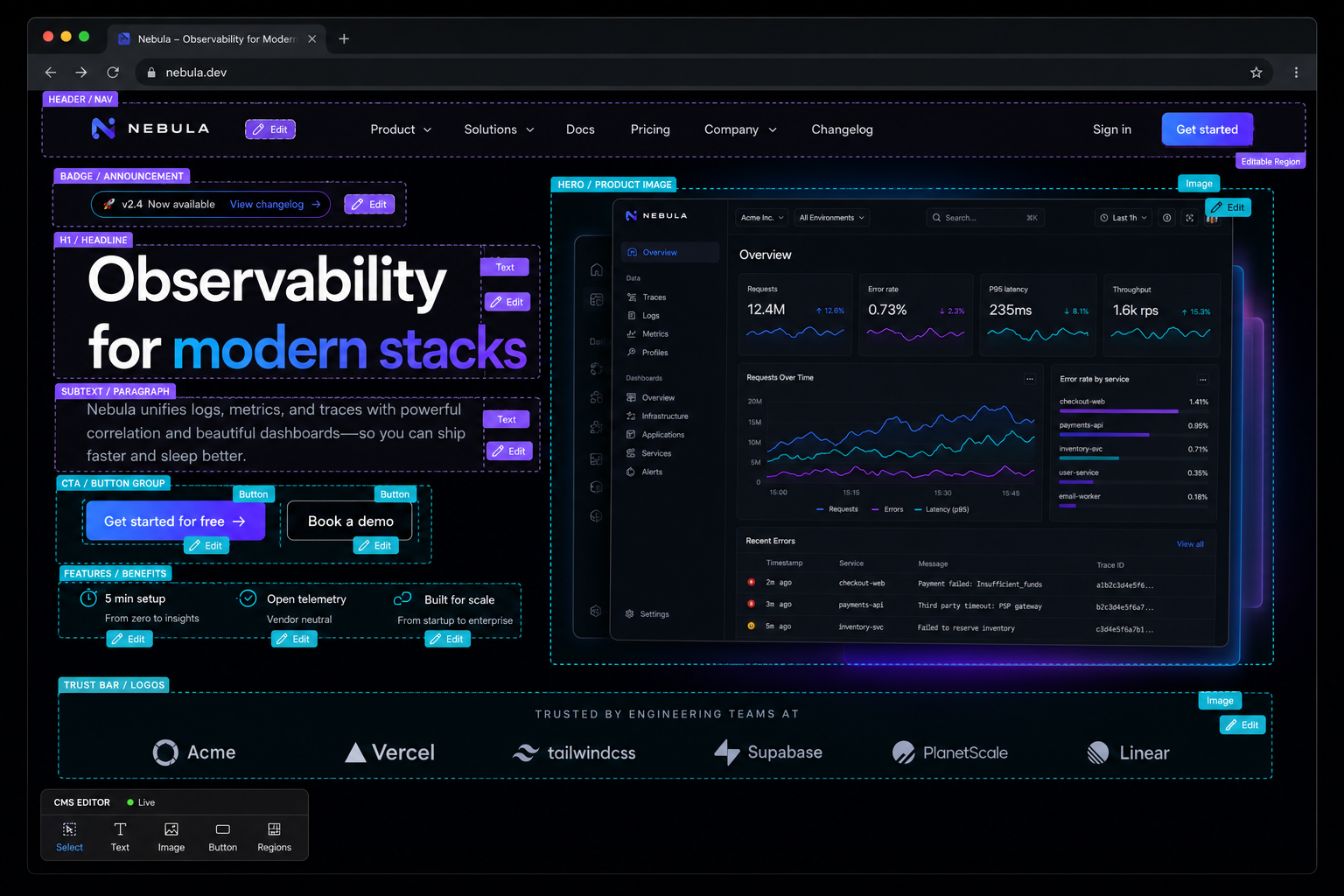
An in-context overlay lets your team edit text, swap images, toggle sections and roll back — backed by your content store.
Built for the modern frontend
Every capability is designed around one rule: the compiler always emits every region, so you turn features on with a key — never a rewrite.
Automatic discovery
Nexus crawls your routing layer and component trees to infer intent — recognising patterns, semantic HTML and prop types. No manual schema.
No wrapper soup
A build-time compiler injects invisible ids. Your source stays readable — no triple-nested editable wrappers.
Self-contained overlay
The editor renders in an isolated top layer and rebuilds hit-targets from measured boxes — even an image behind text stays editable.
Override model
Your code is the source of defaults; the CMS stores overrides. Diff-vs-original, revert and versioned rollback come for free.
Pluggable adapters
Ship to any content store through a small adapter interface — bring your own backend, headless CMS, database or REST API.
Framework agnostic core
Optimised for Next.js, designed for Nuxt, SvelteKit and Astro. The model is just stable ids + overrides.
Build normally.
Manage visually.
Try the in-context editor on this very page — then read the docs to wire Nexus into your own Next.js app in minutes.